Comparative Analysis
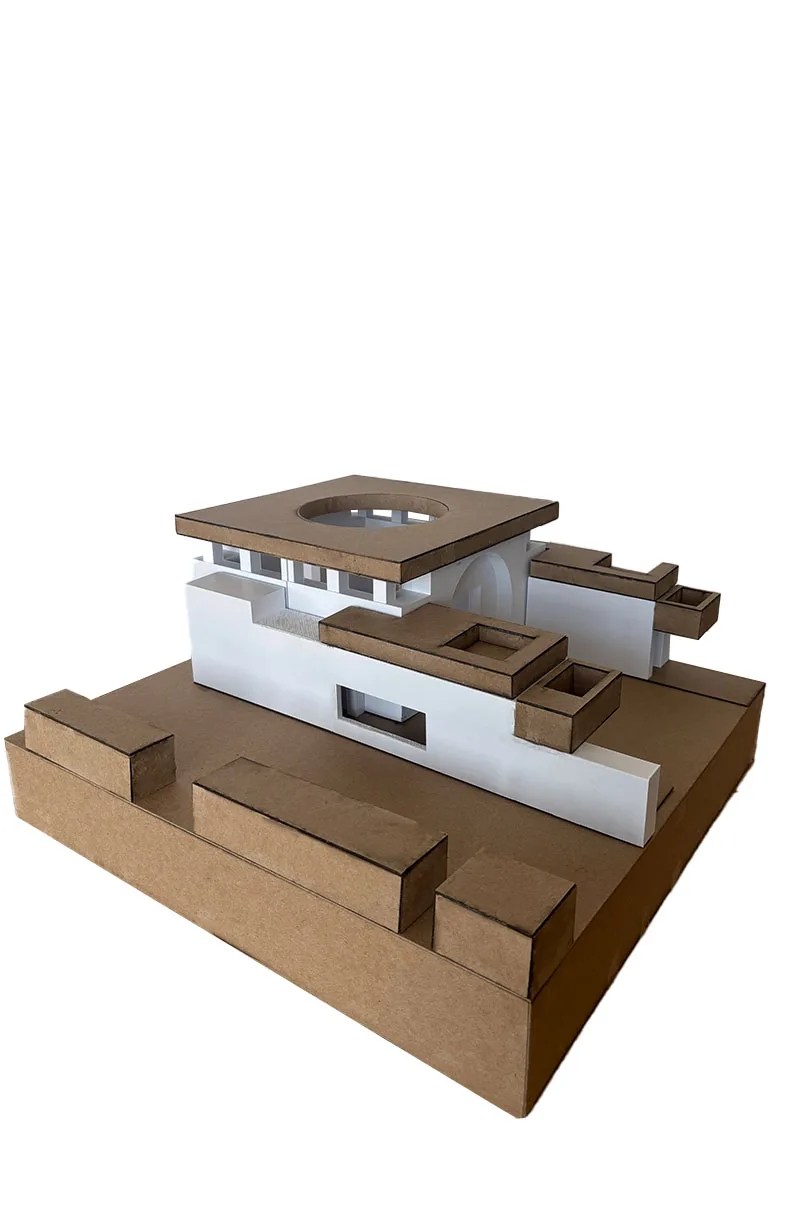
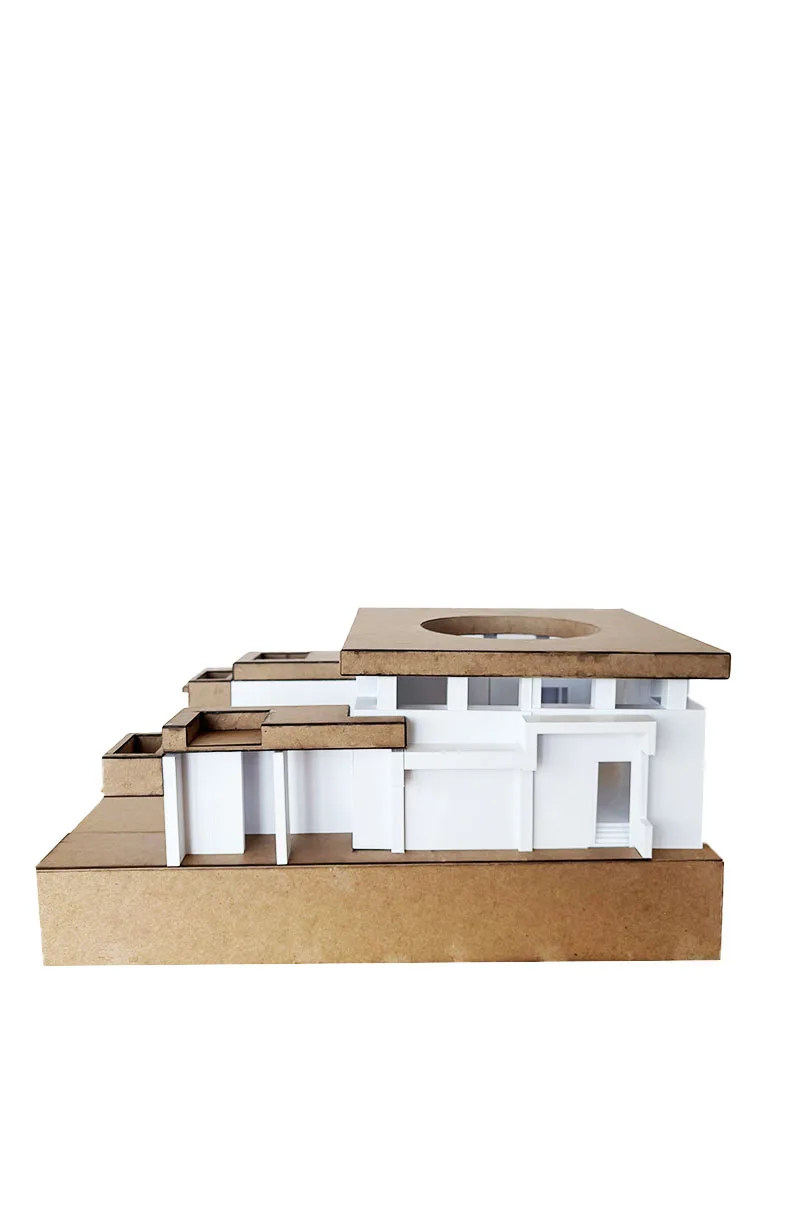
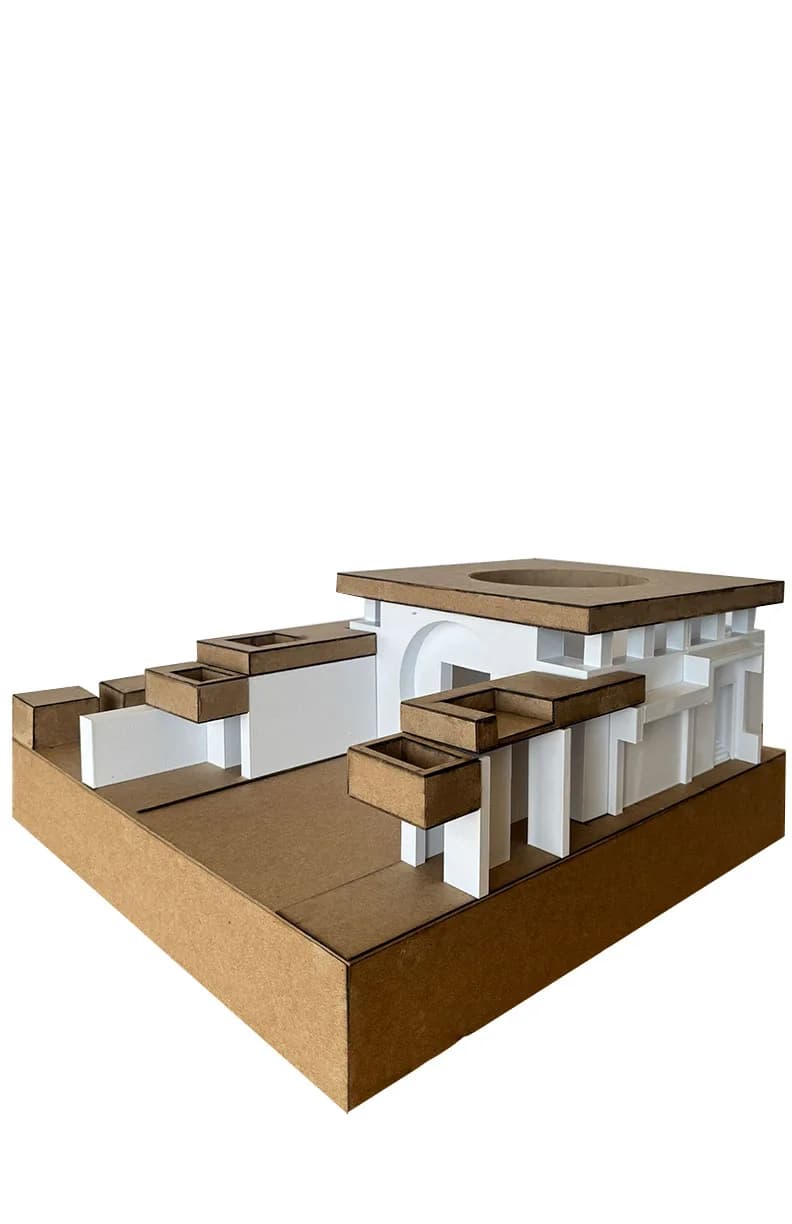
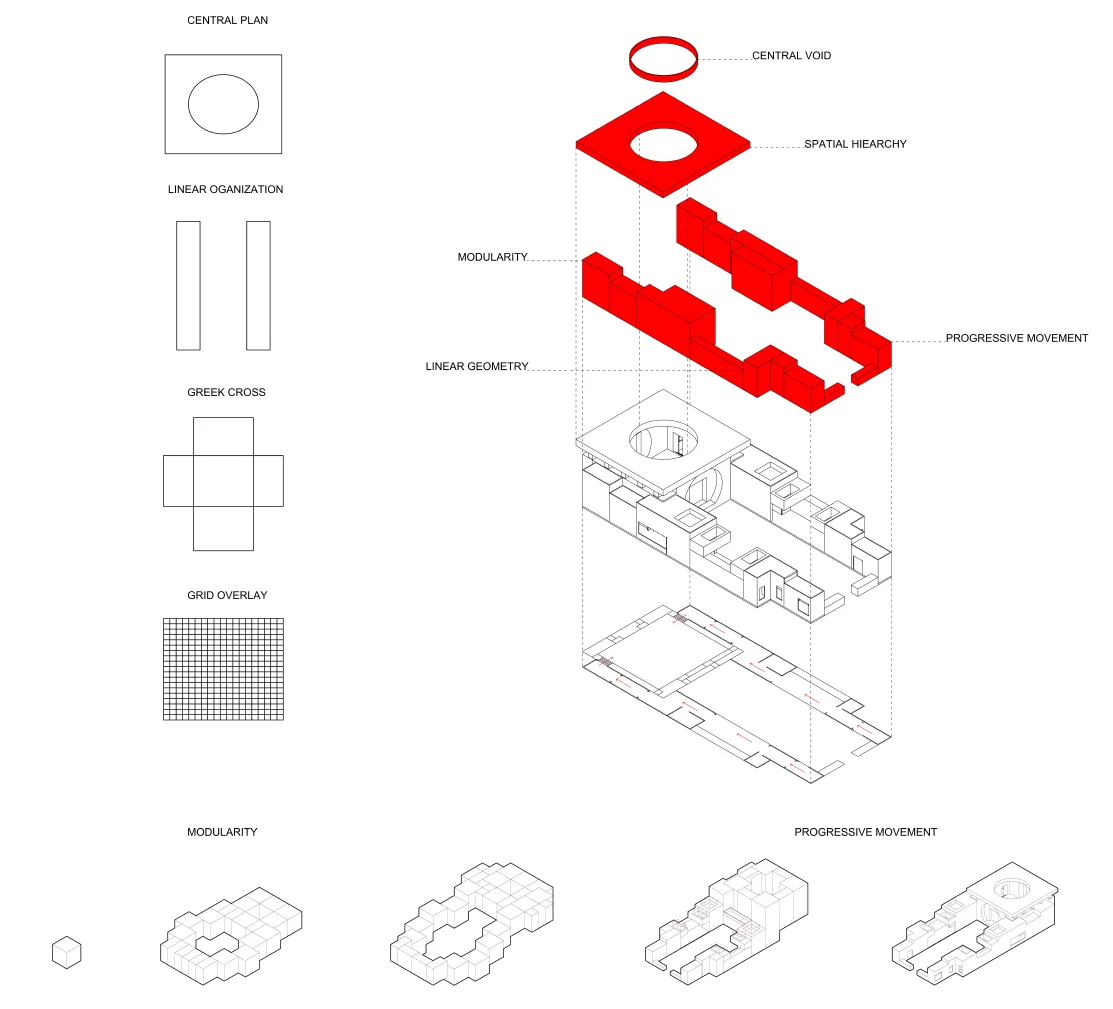
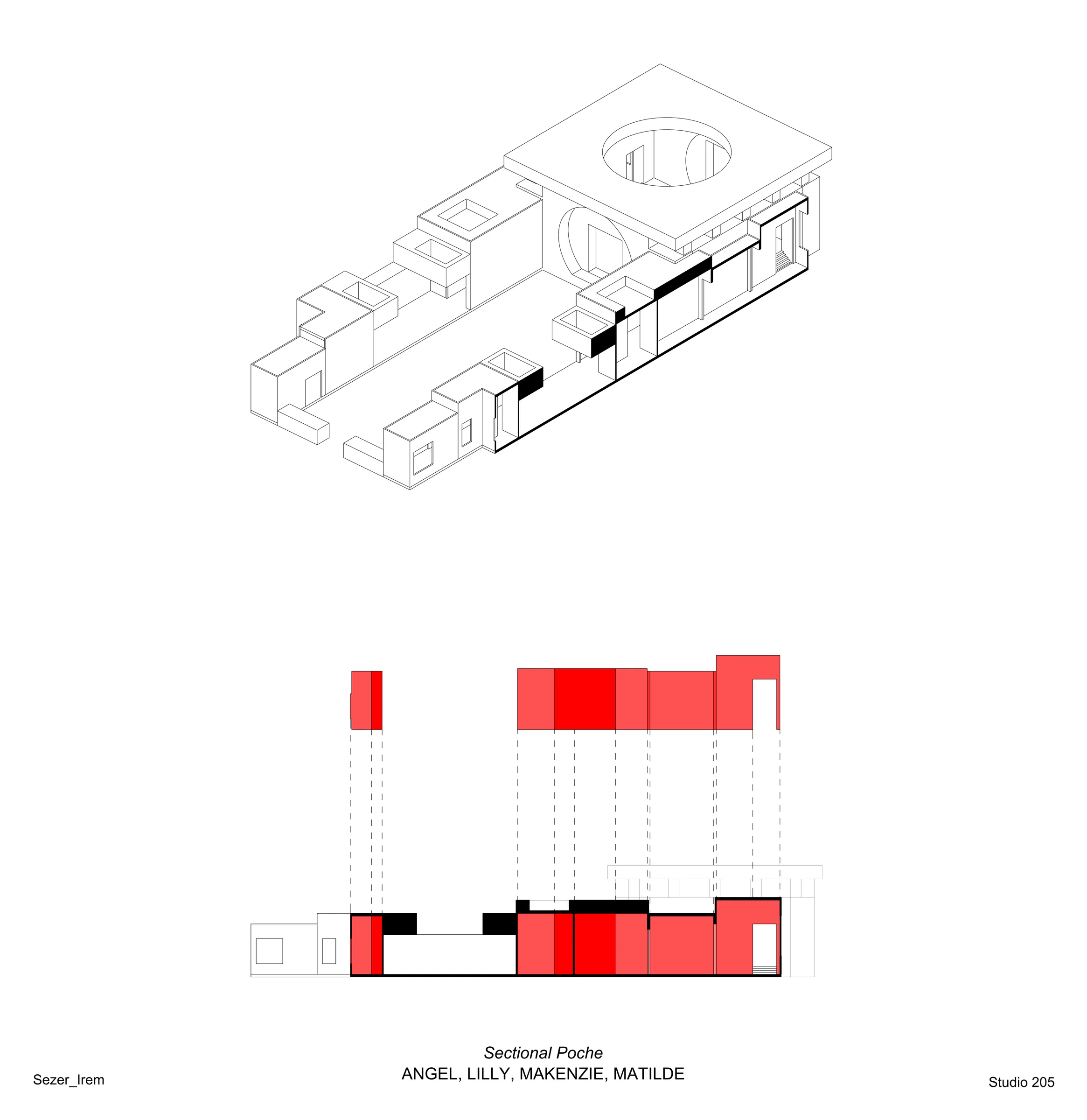
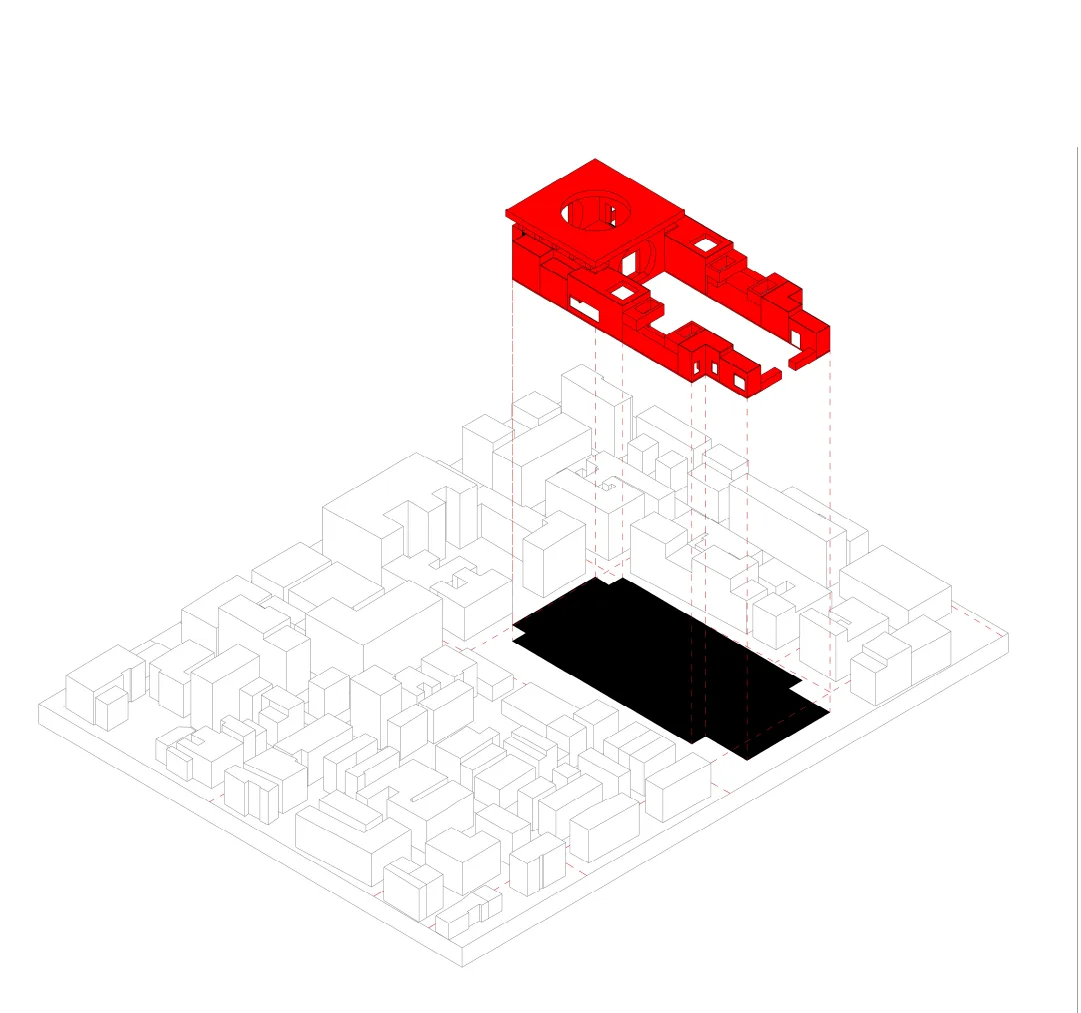
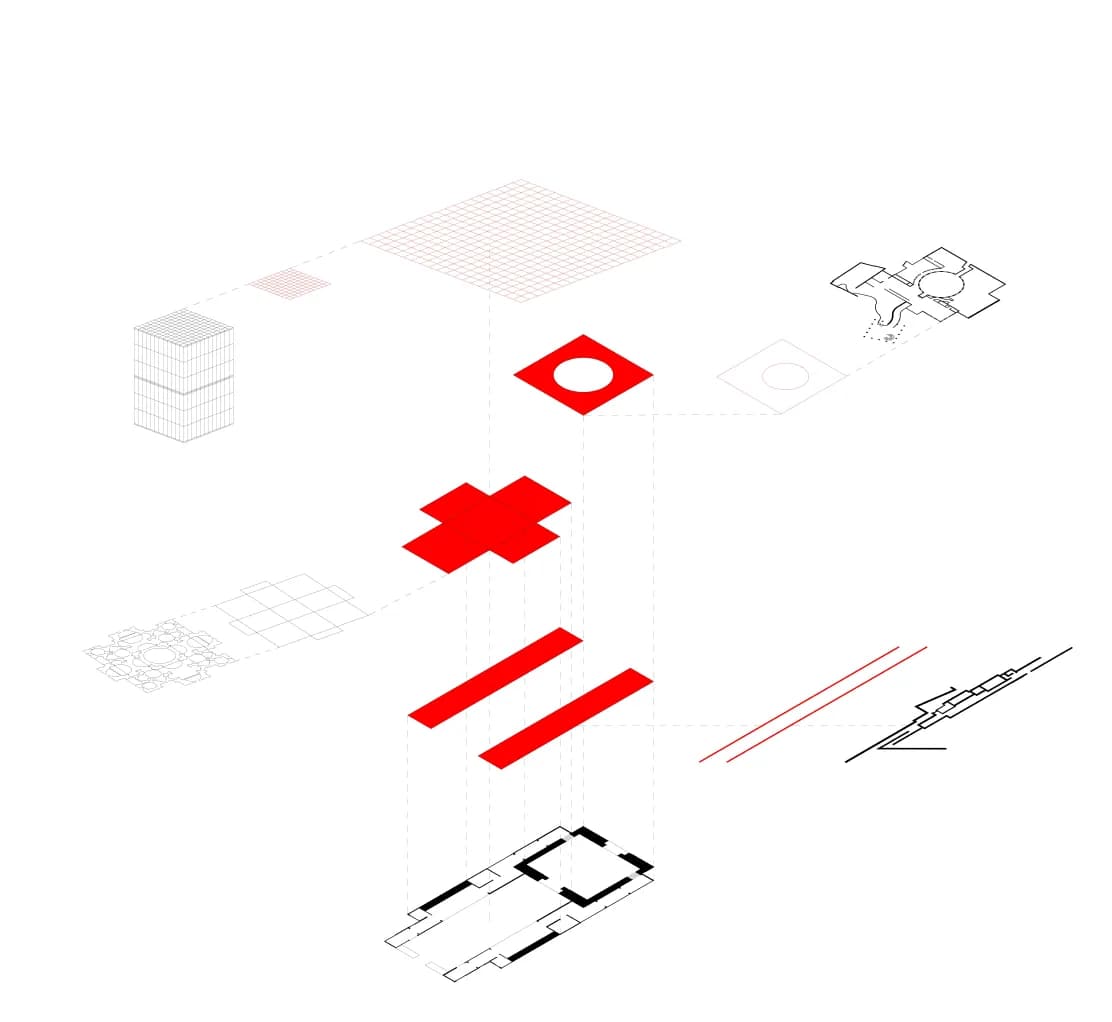
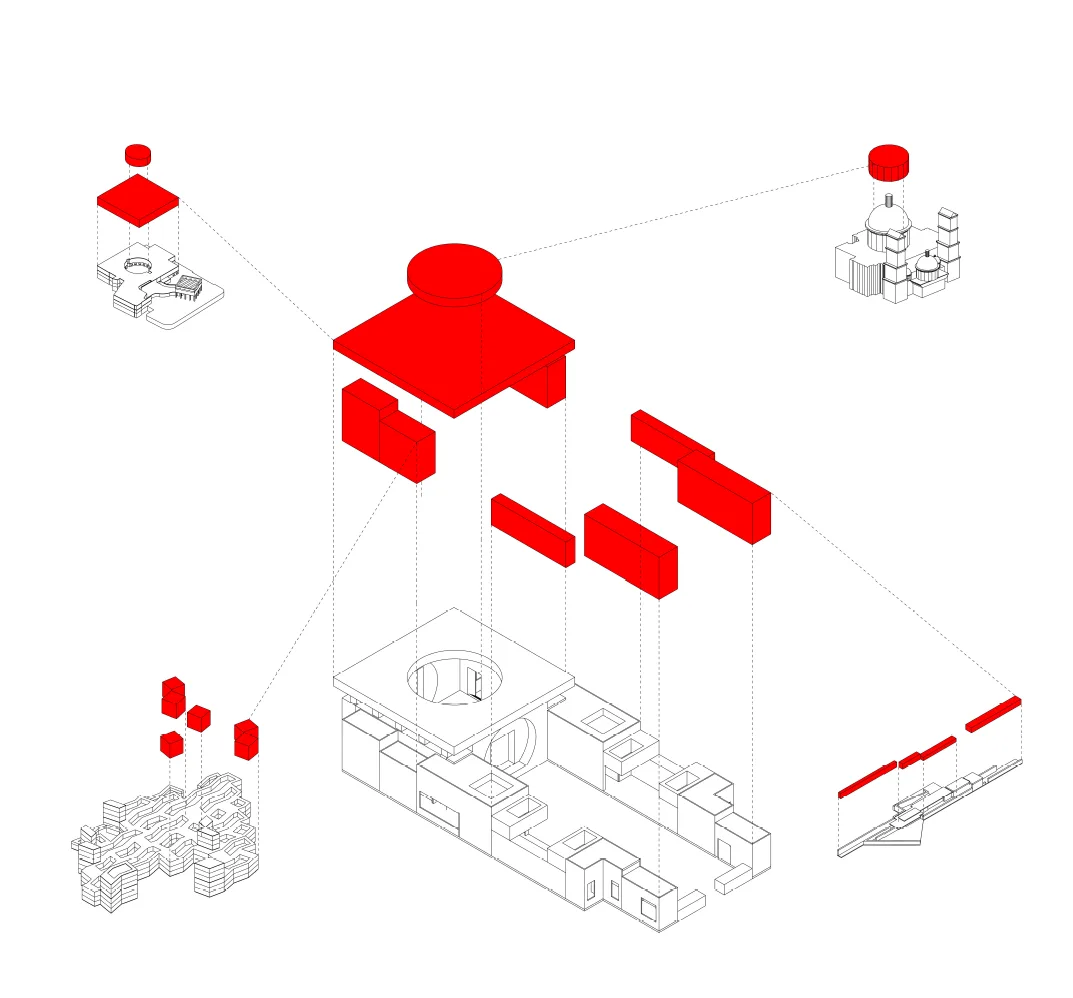
This project asked us to build a comparative analysis grounded in four precedents, each offering a distinct lesson in organization and form: Stirling’s Düsseldorf Museum (loose aggregation around a courtyard), Bramante’s St. Peter’s Basilica (centralized, hierarchical planning), the Leca Swimming Pools (linear circulation along a natural edge), and Mansilla + Tuñón’s MUSAC (nested cellular geometry and layered courtyards). From these, we were tasked with synthesizing an original architectural object rather than replicating any single source. My role began with a study of Bramante’s St. Peter’s Basilica. I analyzed its centralized plan, spatial hierarchy, and the relationship between solid and void. A dominant central void anchors the design, supported by a rigid grid. Together, they organize circulation and hierarchy. We then expanded to other precedents, comparing their geometry and figure-ground relationships. Through diagramming, we extracted transferable concepts rather than literal forms. My interpretation centered on solid and void. St. Peter’s and MUSAC showed how a central courtyard or oculus creates hierarchy. Düsseldorf and MUSAC showed how dispersed voids and overlapping volumes create movement instead of static symmetry. The Leca Pools reframed circulation as a linear procession tied to context. Layering these ideas produced modular volumes, varying elevations, and a strong central void. Sited within an urban grid, the building can be read and entered from all sides.